A global provider of integrated cold-chain equipment and solutions

The Role of Nearshore Containers
2023-06-14
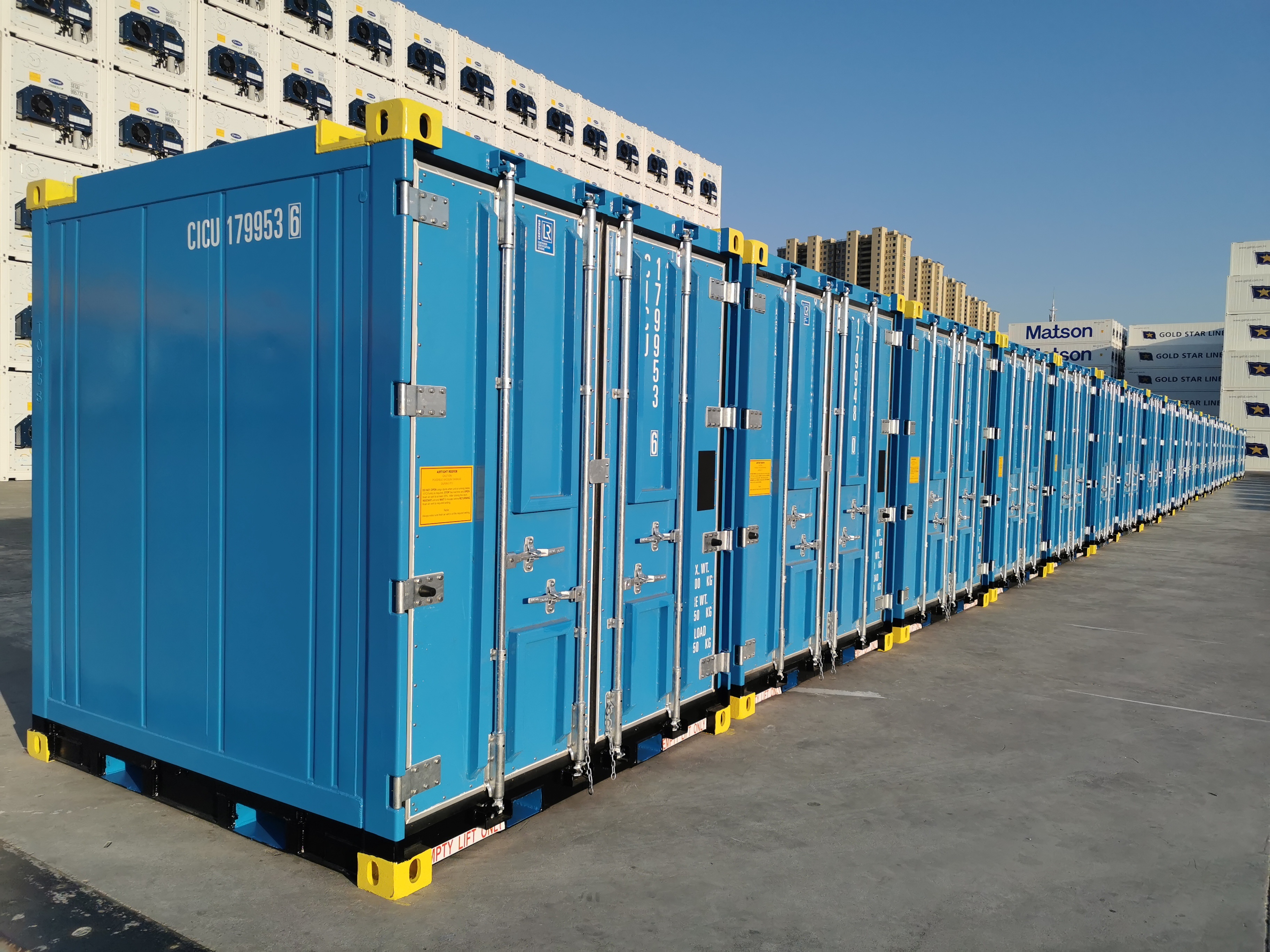
Nearshore containers are primarily used for the storage and transportation of maritime cargo in nearshore shipping, and their main functions are as follows:
1. Material storage: Nearshore containers have a certain capacity, allowing for temporary storage of goods before sea transportation, effectively serving as an intermediate warehouse. This approach can optimize production schedules and shipping frequencies, making full use of transportation resources.
2. Transport packaging. The nearshore container itself serves as a sealed transport package, providing protection for goods during transit and preventing damage caused by seawater, humidity, impacts, and other environmental factors. This helps reduce both additional packaging costs and logistical losses.
3. Convenient loading and unloading: The standardized design of nearshore containers ensures compatibility with a variety of lifting and transportation equipment, simplifying port handling operations and boosting efficiency. Standard containers can be directly loaded and unloaded using dump trucks, container trucks, or forklifts.
4. Enhanced transport capacity: Using standard containers boosts a ship's loading capacity and optimizes space utilization, effectively increasing the carrying power of each vessel while reducing transportation costs. Ships can now select appropriate weight limits and cargo hold capacities based on the specific container type.
5. Standardization of transportation. Standardizing the specifications of nearshore containers simplifies terminal operations, facilitates transshipment and transit, enables seamless coordination across different transport stages, and ultimately enhances overall logistics efficiency.
6. Freight settlement standards. For nearshore containers, both volume and weight are used as billing criteria, providing a standardized measurement and settlement basis for transportation pricing, thereby facilitating freight payment arrangements between shipping lines and cargo owners.
7. Tracking and Monitoring. Container numbers are marked on offshore containers, enabling real-time monitoring of their dynamic location and status during transportation via electronic information systems, thereby enhancing the informatization of logistics and improving cargo security.
In summary, the near-sea container, as a standardized transport and packaging solution, primarily serves to enhance shipping efficiency, reduce logistics costs, and facilitate both cargo supervision and advanced information management. Widely adopted in international maritime transport and long-distance sea shipments, it has become one of the key technological tools driving the evolution of global trade.
Previous post:

Contact Us
Business contact:0086-512 33027708
Phone:0086-512 33027777
Email:xingbiao.shi@cimc.com
Address: No. 99 Binjiang Avenue, Taicang Port Economic and Technological Development Zone, Jiangsu Province

Business contact:
E-mail:


